
Why the Shahs Believe Philanthropy Should Start Before You Feel Ready
Vidya and Rashesh Shah, EdelGive Foundation, on why waiting for "enough"wealth or "enough" time is the biggest mistake new givers make inphilanthropy
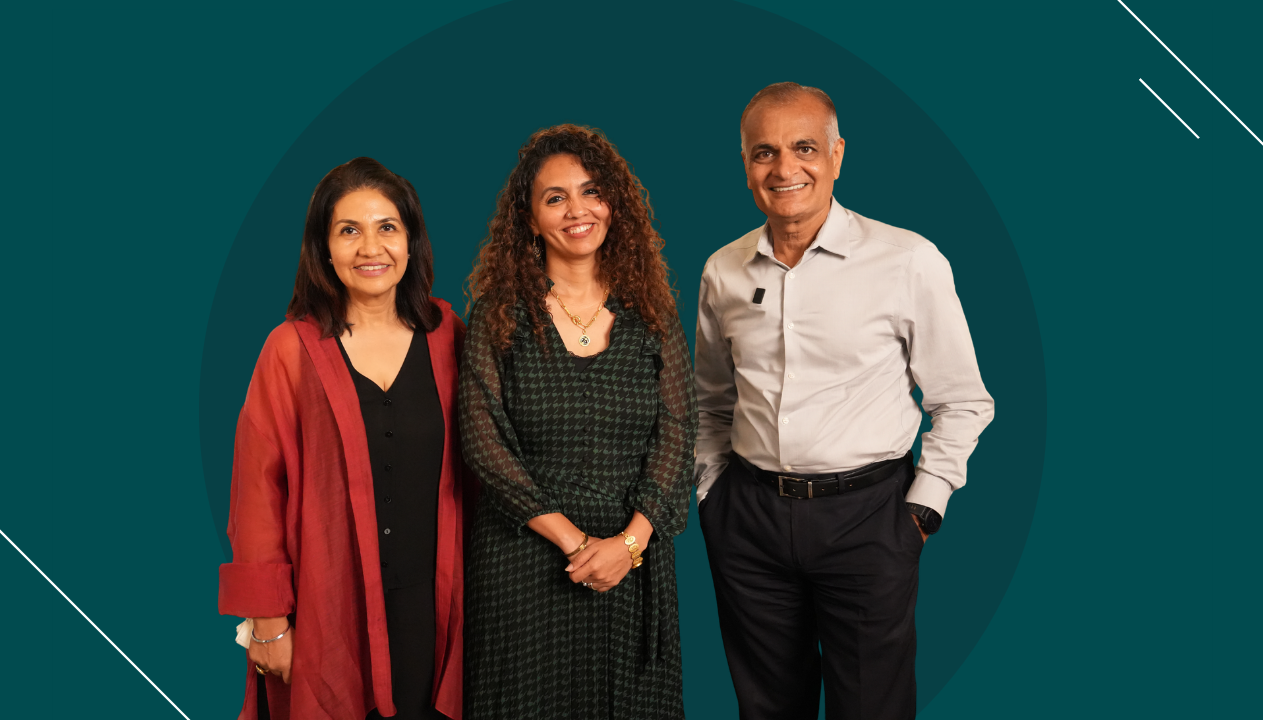



Key Takeaways:
- Philanthropy as "Personal Social Responsibility" — Rashesh Shah argues that giving shouldn't wait for institutions or milestones: "I think every individual should do PSR - Personal Social Responsibility if you can afford it."
- Impact over ego — Vidya Shah pushes back on the idea that any single donor can solve systemic issues alone, urging givers to focus on what moves the needle regardless of scale.
- Men and women give differently, and that's useful — the conversation surfaces real differences in how each of them approaches philanthropic decisions, treating that difference as a strength rather than a friction point.
Most conversations about philanthropy start with scale: how much to give, and to what. Vidya and Rashesh Shah, speaking with EdelGive Foundation CEO Ms. Naghma Mulla on the podcast Give It A Go, start somewhere earlier — with the argument that timing, and personal conviction, matter more than most new givers assume.
Their own philanthropic journey, as they describe it, began well before institutionalised giving through EdelGive Foundation took shape. EdelGive was founded to bridge the need for resources between for-profits and non-profits. However, over time, that instinct evolved into a deeper commitment - to structure philanthropy in a way that strengthens institutions, not just supports projects. Vidya’s early philanthropy experiences and hands-on exposure to a rural handloom community are described as grounding moments, points where the gap between intention and on-the-ground reality became clear, and where lessons about patience, humility, and local context were learned directly rather than through reports. That early, imperfect start, they suggest, taught them more than years of planning would have.
For Vidya, the pull toward philanthropy wasn't a strategic pivot so much as a personal one. "It made so much more sense to focus on something like that [philanthropy]... spending time and money in that space was giving me so much more joy than doing something else," she said. Rashesh frames that same instinct as something every capable individual owes, not just the wealthy: "I think every individual should do PSR - Personal Social Responsibility if you can afford it."
That doesn't mean the work feels simple once you start. Vidya was candid about the limits of what any one donor can do: "It's arrogant to think that one person, one organisation or even a group of organisations can solve some of the issues we have... There are times when you are disheartened. But I always remind myself that you should just do what you can, it doesn't matter how large or small your resources are, focus on what you think is going to move the needle." Underlying that instinct is a broader equity principle she returns to often: "At least people should have the same starting line."
The conversation also gets candid about how differently the two of them approach giving. "Men and women look at philanthropy differently," Vidya said. "Men tend to look at evaluation and measurement more, they need to see impact in data and numbers. I feel that women, perhaps because of their lived experience, have put a little bit of themselves and their experiences in how they do their philanthropy. So it's not that they don't look at data and don't believe in measurement, they're just able to get it a little faster." Rather than treating that difference as something to smooth over, the Shahs frame it as a genuine asset in how they've built their giving together.
The throughline is a simple, practical nudge: don't wait for the "right" moment, the "right" amount, or the "right" expertise. The value of starting early, in their account, isn't sentimental — it compounds, the same way capital does.