
Why Education Philanthropy Is the Shibulals' Long-Term Bet
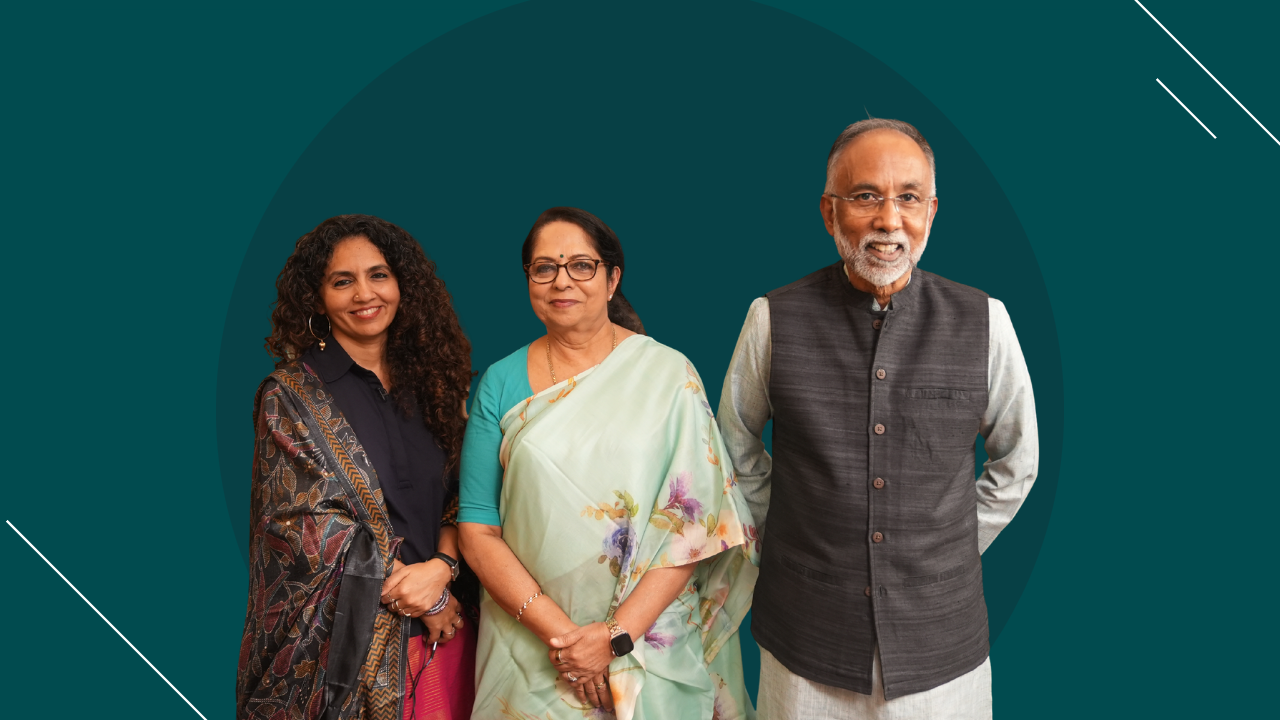
S.D. Shibulal and Kumari Shibulal, Shibulal Family Philanthropic Initiatives, on why education outcomes take fifteen years to show up — and why that's not a problem to solve.



Key takeaways:
- One lever, chosen deliberately — of all the causes available to a first-generation philanthropic family, the Shibulals chose to concentrate on education specifically, calling it the only truly transformative force available at scale.
- Three barriers, not one — their framework breaks the education gap into accessibility, affordability, and awareness, treating each as a distinct problem requiring its own intervention rather than a single fix.
- Patience isn't optional — the couple are candid that meaningful education outcomes can take seven to fifteen years to materialise, and that philanthropy built around annual reporting cycles isn't built for that timeline.
Most philanthropic portfolios spread across several causes at once. Mr. Shibulal and Ms Kumari Shibulal, in conversation with EdelGive Foundation CEO Ms. Naghma Mulla on the podcast Give It A Go, went the opposite direction: over 25 years, they've stayed almost entirely focused on one lever - education - and built increasingly ambitious programmes around it rather than diversifying. “Looking at the success of the people you support, grow and succeed is one of the joys in life”, says Ms. Shibulal; it’ is contagious, you can't stop.”
Their reasoning treats education as central: “If you look at our life, one critical thing that has helped us to get here is our education,” Mr. Shibulal. Having experienced its effect on their own trajectories firsthand, both describe it as the rare force capable of creating upward mobility, changing social status, and producing role models within a single generation. That belief shows up structurally in SFPI's work through three distinct problems the couple identify within education itself: accessibility (getting quality schooling to the roughly 300 million children in India's system at all), affordability (making the path through higher education realistic for underprivileged students), and awareness (the fact that many families, particularly in rural India, don't yet see education's full potential to change a household's trajectory).
Mr. Shibulal recounts that “when we started thinking about doing something in the social sector...around ’98, we decided that the best area of work would be education…it is an area of passion for us and an area of transformation for children”. Programmes like , Vidyadhan , Ankur, and Shiksha Lokam each target a different piece of that three-part problem rather than trying to solve all of it at once.
What ties it together is their commitment to scale and an unusually explicit acceptance of slow timelines.
“Last year we got 100,000 applications for 3000 scholarships, and of them 75,000 are deserving children,” says Ms. Shibulal. To address this, they had to structure themselves as an “operating philanthropy”. Together, they built an institution of many qualified people, most of whom come from the program itself. With a heavy reliance on technology, the organisation processes the applications, testing, interviews, and selections online. As well as the monitoring and mentoring of children.
Mr. Shibulal believes that in order to create scale and make it sustainable, you need the right set of leadership, people, process, and technology.
The Shibulals have spoken about the need for "line-of-sight impact" paired with real patience - acknowledging that education programmes can take anywhere from seven to fifteen years before their effects are fully visible. That's a hard fit for a philanthropic culture that often wants annual proof of impact, and the couple treats that mismatch as something donors need to get comfortable with, not something to engineer around with shorter-term metrics.
The lesson sits somewhere between focus and endurance: pick the lever most likely to compound, then commit to a timeline long enough for the compounding to actually show up.