
The Asymmetrical Payoff of Giving
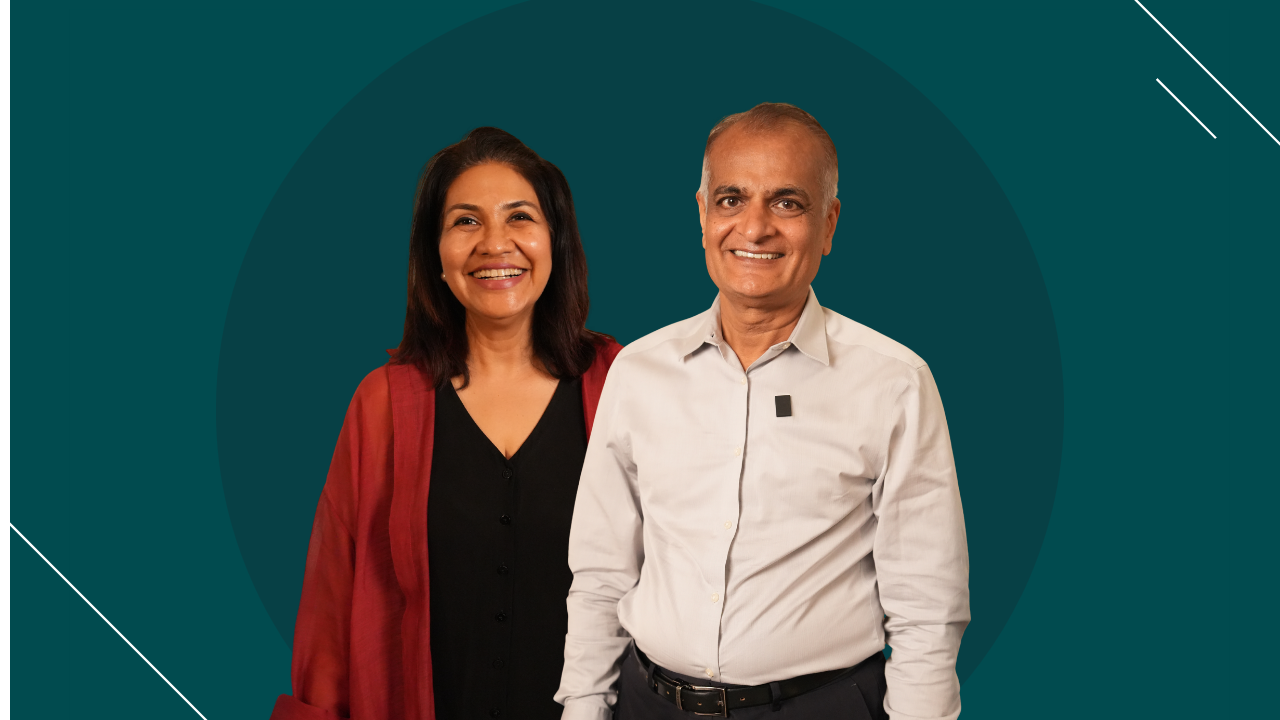
Vidya and Rashesh Shah, EdelGive Foundation, on why philanthropy is the best"investment" they ever made — and why it only works if you play thelong game.



Key Takeaways:
- Philanthropy as an "asymmetrical payoff" — Rashesh Shah applies an investor's lens to giving, arguing the return on a philanthropic rupee can outweigh what it cost the giver, much like a well-placed venture bet.
- Playing the long game — the Shahs describe both wealth and institution-building as compounding processes, arguing that lasting philanthropic impact requires staying the course rather than chasing quick wins.
- Design at scale, don't design to scale — Vidya Shah's approach to building programs treats collaboration and network design as core infrastructure, not an afterthought bolted onto funding.
Philanthropy is often described in the language of caution — due diligence, risk mitigation, measured bets. Vidya and Rashesh Shah, in conversation with EdelGive Foundation CEO Ms. Naghma Mulla on the podcast Give It A Go, reframe it instead through the language they know best: investing.
"While Vidya saw the emotional side in this [philanthropy], I saw the rational business side, we all make investments with asymmetrical payoffs," Rashesh said. "I think philanthropy and giving back to society is also an asymmetrical payoff. What I'm giving may be a small amount to me, but the payoff is so much higher." That framing extends to how the couple think about time horizons: "There is a compounding of wealth but there is a compounding of organisation building as well... stay for the long term, play the long game," Rashesh added.
Much of that long game has played out through EdelGive and the collaborative giving network the Shahs have built. Vidya traces the model's design back to an earlier chapter of her career: "I learned a lot from the Asset management part of Edelweiss, I saw that it was possible to build a good platform and the robustness of that platform is not only the design element, but the ability to engage with all the actors... and that's what translated into philanthropy." That instinct for platform-building over one-off giving shows up in how she talks about collaboration itself: "Collaboration really brings asymmetric payoff, not just because you have more money that you're working with, but because you have the diversity of thinking in the room." Her advice to anyone trying to scale impact is characteristically compact: "Don't design to scale, design at scale."
The story they tell isn't about writing bigger checks — it's about building trust and expanding a collaborative network to the point where it could bridge real gaps in the philanthropic ecosystem, setting realistic expectations with NGO partners rather than transactional, results-on-demand relationships. At EdelGive, collaboratives are more than just pooled funds, they are long-term operations with shared goals, pooled grants, and multi-stakeholder design. Authenticity, in their telling, isn't a soft value; it's what makes that trust durable enough to survive setbacks.
Rashesh also pushes back on the idea that institution-building and personal giving are competing instincts. "There is this deep desire to institutionalize everything," he said. "If you look at foundations in the world and even in India that have been built, there is legacy that has been created, and individual effort and payoff along with institutionalization is actually a double whammy." In other words: the personal motivation doesn't have to disappear once the giving becomes structured — done right, the two reinforce each other.
It's a reframe worth sitting with: treating philanthropy like a genuine investment — with payoffs, compounding, and platform design — doesn't make it less generous. In the Shahs' account, it's what makes generosity durable.