
Philanthropy Beyond the Cheque: Govind Iyer and Amita Chauhan on the Future of Social Impact in India
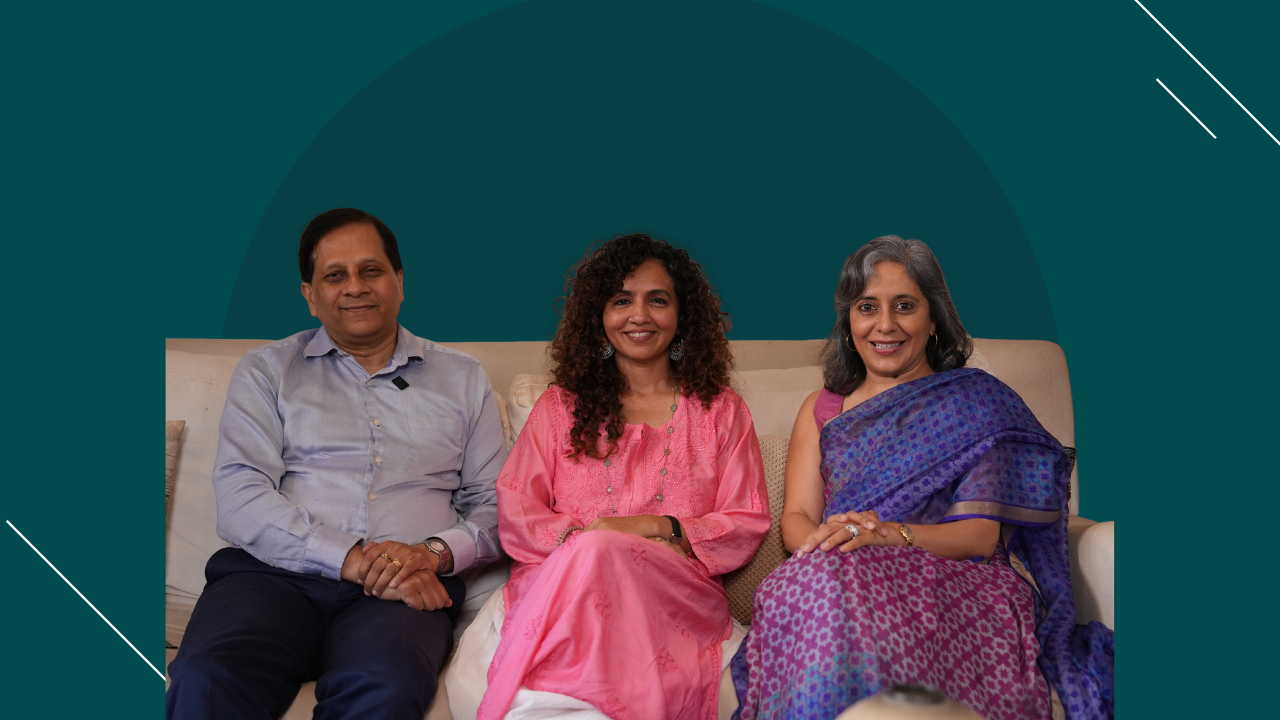
In this episode of Give It A Go, the conversation moves beyond numbers to presence, as Mr. Govind Iyer and Ms. Amita Chauhan explore what it truly means to show up.



Key Takeaways:
- Through Social Venture Partners (SVP), more than 750 partners across India have worked hands-on with over 220 nonprofits — not just funding them, but mentoring, advising, and helping build institutional capacity.
- The giving journey tends to change the giver. Mr. Iyer put it simply: a lot of young professionals join philanthropy out of curiosity, and stay because of what it teaches them about themselves.
Most people, when they think about philanthropy, think about money first. It's a fair assumption — donation amounts and fundraising numbers are usually what make headlines. Sitting down with Mr. Govind Iyer and Ms. Amita Chauhan to put together this episode, one might have expected the conversation to circle back to numbers at some point.
It didn't. Or rather, it did — but numbers were never really the point.
What Mr. Iyer and Ms. Chauhan kept returning to, in their own ways, was participation. Not giving as a transaction, but giving as involvement — showing up, staying present, and letting yourself be changed by the process along the way.
It's a subtle shift, but a meaningful one, especially given where India's social sector stands right now. According to the Bain-Dasra 2024 India Philanthropy Report, private philanthropy in the country grew 10% in FY 2023 to ₹1.2 lakh crore, with family philanthropy climbing 15% and retail giving up 12%. Genuinely encouraging numbers. But widen the frame a little and the picture gets more sobering: India's social sector spending stood at roughly 8.3% of GDP in FY 2023 — about ₹23 lakh crore — while NITI Aayog estimates the country actually needs closer to 13% of GDP annually to meet the SDGs. That gap isn't just a funding gap. It's a people gap too.
That's really where Mr. Iyer's work lives. Through Social Venture Partners (SVP) — a network of professionals, entrepreneurs, and families who support nonprofits with more than just money — he's spent years watching what happens when people bring their time and expertise alongside their cheques. Today, SVP counts 775+ partners across India, supported 115+ nonprofits, offering mentorship, strategic guidance, leadership support, and institutional capacity building.
Asked why so many younger professionals stay involved with SVP long after the initial curiosity wears off, Mr. Iyer's answer was telling: "They're staying on because it's helping them in their journey of discovery of their lives."
In Mr. Iyer’s experience real time spent with grassroots organisations and social entrepreneurs tends to unsettle people's assumptions, in a good way. It makes them ask harder questions about their own lives, not just about the causes they're supporting.
Which is maybe why his advice to anyone considering philanthropy is so unusual: "Don't view it as giving. Don't view it as charity. Don't view it as philanthropy. View it as self-development,” Mr. Iyer told EdelGive Foundation CEO Ms. Naghma Mulla on the podcast Give It A Go.
It can sound almost self-serving on first hearing. But anyone who has spent real time around social sector leaders tends to understand exactly what he means. Most of them aren't operating with much certainty — funding is unpredictable, resources are thin, the challenges are enormous. What keeps them going isn't a salary structure. It's conviction.
As Mr. Iyer put it: "They're not doing a job. They're doing a mission." There's something about proximity to that kind of conviction that changes how people think about their own choices.
Ms. Chauhan arrived at a similar place, but through a different door. She spoke about the pandemic — about how COVID-19 made inequalities that many people had learned to look past suddenly impossible to ignore. Communities were struggling in ways that were visible, immediate, hard to rationalise away. And people from all kinds of backgrounds started asking the same question at the same time: how do I help?
"People sat up and said, okay, we're going to do something about this," she recalled. What followed, in her telling, wasn't just more donations. It was more involvement. People who had never thought of themselves as philanthropists began volunteering, mentoring, fundraising, connecting organisations to the networks and resources they needed. The pandemic, in a strange way, made participation feel less like an abstract ideal and more like the only sensible response.
The conversation kept circling back to something neither of them said outright, but both clearly believed: some of the most valuable things a nonprofit can receive never show up on a balance sheet. Trust. Perspective. Patience. The willingness to sit with a problem instead of rushing to fix it. Easy to overlook precisely because they're hard to measure — but their impact is real.
By the end, both Mr. Iyer and Ms. Chauhan kept returning to the value of actually being present — spending time in communities, not just discussing them in boardrooms. A reminder that philanthropy's future in India will need larger pools of capital, yes. But it will also need more people willing to show up personally, not just financially.
Maybe that's the real takeaway from this episode. Not a call to give more, but an invitation to sit with a smaller, more personal question first: How can I contribute?