
Personal Engagement Matters More Than Money in Philanthropy: Shibulals
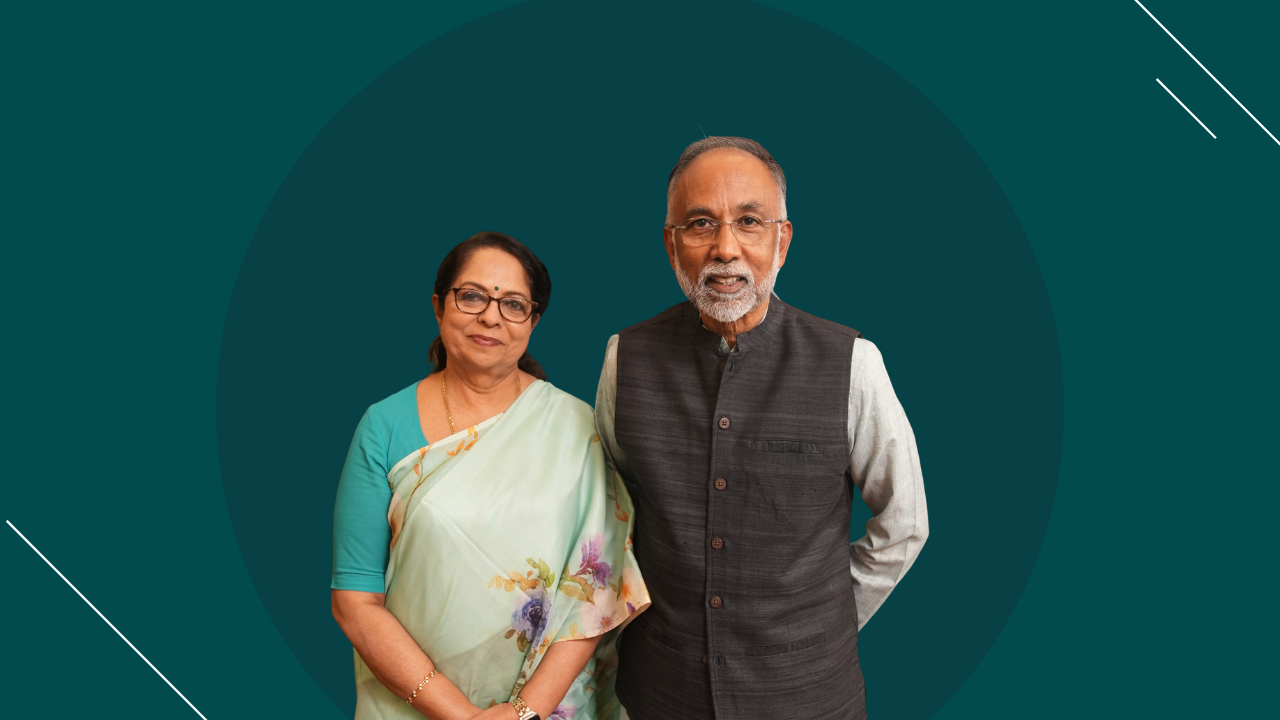
S.D. Shibulal and Kumari Shibulal, Shibulal Family Philanthropic Initiatives, on why showing up matters more than writing the cheque.



Key takeaways:
- Mind before money — the Shibulals describe their approach as "more mind than money," treating personal, hands-on engagement as the real currency of philanthropy, not the size of the donation.
- Start small, then earn the right to scale — their model moves deliberately through pilot, project, platform, and network stages, resisting the pressure to scale before an idea has actually been tested.
- No single funder can go it alone — partnerships built on an "each one, teach one" logic are treated as essential, not optional, because the scale of India's challenges outstrips what any one family or foundation can fund alone.
Twenty-five years into their philanthropic journey, Mr. S.D. Shibulal and Ms.Kumari Shibulal, in conversation with EdelGive Foundation CEO Ms. Naghma Mulla on the podcast Give It A Go, return to a distinction that shapes everything else about how they give: money is necessary, but it isn't the point. “I think we’ve experienced many people in our lives who started out life simply….It [giving] has nothing to do with how much you have, but it is a choice you make,” said Mr. Shibulal. For him, there is no barrier to entry: “There is never enough, and there is never so little that you cannot share”.
Ms. Shibulal has spoken about choosing to fully immerse herself in the Shibulal Family Philanthropic Initiatives (SFPI) rather than treating it as a funding vehicle to oversee from a distance - an ethos the couple sums up as putting "more mind than money" into their work. That personal engagement shows up in how SFPI actually operates: rather than launching large programmes outright, initiatives typically start as a small pilot, get proven as a project, mature into a platform, and only then expand into a wider network. It's a sequence designed to protect against the common philanthropic failure mode of scaling something that was never properly tested in the first place.
That same instinct for humility about scale shows up in how the Shibulals talk about partnerships. No matter how successful a single initiative like Vidyadhan - their flagship scholarship programme - becomes, they're candid that no one organisation can reach the scale India's problems demand alone. Their "each one, teach one" approach to partnerships isn't framed as generosity so much as necessity: multiplying reach requires giving other organisations and individuals a stake in the work, not just funding.
The through-line across two and a half decades of giving is a redefinition of what "investment" means in philanthropy - not just capital deployed, but attention, presence, and time given personally. In the Shibulals' account, that's the part that's harder to write a cheque for, and the part that actually moves outcomes. Mr Shibulal says, “ People look for credibility and impact; they need to become comfortable with giving… they need to start, once you start, generally, it becomes addictive.”