
Mental Health, Vulnerability and Corporate Leadership: Harsh Mariwala's Lessons for CEOs
Mr. Harsh Mariwala, Founder and Chairman of Marico Limited, on why he champions mental health as a cause, why CEOs need to be vulnerable, and how peer networks like ASCENT reinforce that mission.
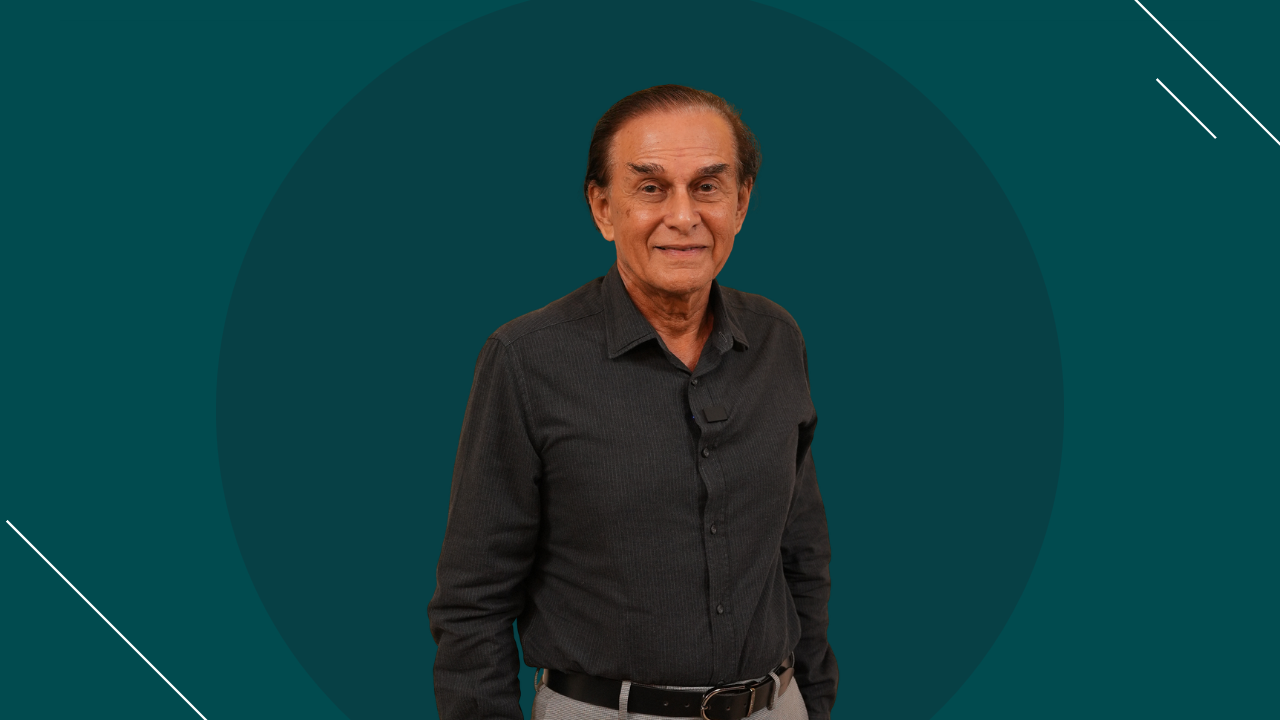



Key takeaways:
- Vulnerability at the top — Mr. Mariwala was "very vulnerable" with his own team, admits he has "cried in front of his kids," and believes every senior leader has blind spots that only open conversation can fill.
- A neglected space —Mr. Mariwala found mental health to be "a completely neglected space," driving significant productivity loss across urban and rural India, and across every income and age group.
- Mental health as mainstream philanthropy — Through the Mariwala Health Initiative, his philanthropy has reached over 4.6 lakh people, enabled 1.8 lakh counselling sessions, engaged 2.3 lakh through awareness campaigns, trained 24,000+ individuals, produced 127 research publications, and facilitated 17,000+ referrals to support.
Mr. Harsh Mariwala, entrepreneur and Founder-Chairman of Marico Limited, doesn't treat mental health as a standalone cause — he tackles it from two directions at once. One non-profit addresses it head-on as a cause in its own right, while through ASCENT, he has engineered entire structures for peer bonding among business owners and entrepreneurs: safe spaces built so mental health is never reduced to lip service, but woven into the everyday work of leading.
Leading with Vulnerability
Most CEOs are trained to guard their weaknesses. Mr. Mariwala chose otherwise. "I deviated from that, and I was vulnerable with them because many CEOs think, 'What will others think of me if I show my weaknesses?'" he says. "But anyway, they will know that something is wrong."
He describes being "very vulnerable with the people who reported to me," and adds that he "was part of some other similar groups where I would discuss things." That openness, he believes, isn't optional for anyone running a business: "Every CEO, or every person at a senior level, needs some support because all of us have blind spots." Talking things through, he says, is often the only way those blind spots "get filled by somebody else." For Mr. Mariwala, that vulnerability wasn't confined to the boardroom — "I have cried in front of my kids," he says plainly.
Mr. Mariwala's belief in vulnerability also shaped ASCENT, the peer-learning platform he founded in 2012 for entrepreneurs. Built on the "Power of Collective," ASCENT brings together business owners in confidential Trust Groups — a structure designed so that mental health and personal struggles could be discussed as openly as business strategy.
Why Mental Health Became a Philanthropic Priority
Mr. Mariwala's philanthropic focus on mental health wasn't obvious from the start. "Why did we identify mental health? It came through a process of exploration. It didn't happen automatically," he says. It grew out of two long-standing interests: "I was very passionate about health and very passionate about entrepreneurship. Those were two areas where I felt I could actively involve myself."
What he found, once he looked closely, was a system with almost no support in place. "In the area of mental health, we realized that it's a completely neglected space" — one of the most overlooked issues in the country.
The cost of that neglect, in his telling, is enormous: "There is so much productivity loss. In fact, it affects our lives — not only in urban areas, but even more so in rural areas, and across all income groups and all age groups. Everybody experiences these kinds of stresses and mental health issues."
The bigger barrier, though, wasn't awareness — it was silence. "People were just not willing to open up. They believed it was something they couldn't talk about openly," he says. "And I think that had to change." Held back by the question of "how will others perceive me," he says the stigma is shifting only slowly — "it has changed to some extent, but it's still there" — and that changing it further "has a lot to do with you putting yourself out there and being very vocal about some of these things."
From Awareness to Action: Building the Mariwala Health Initiative
For Mr. Mariwala, the fix is as simple as it is overdue: "it's like this — if you're physically unwell, you go to a doctor. If you're facing mental health issues, you should be able to go to a counsellor. And we have to make that happen." That conviction became the Mariwala Health Initiative (MHI), which takes a rights-based, community-led approach to mental healthcare in India. "Our journey in mental health has changed completely from when we started," Mr. Mariwala says. "We never expected it to evolve the way it did. But as you spend more time on the subject, you think of new ideas and then experiment with them. Some of them will succeed, and some may not."
What began, in his words, as "supporting a few organizations" has since evolved into full-scale research, advocacy and funding. "Now it has evolved into conducting research on what affects mental health in workplaces, what drives mental health challenges in rural areas, how climate change impacts mental health, and what leads to suicide," he says. "We've done an extensive study on suicide and explored how it can be prevented. So today, our work spans research, advocacy, and financial support."
The scale reflects that ambition: MHI has reached over 4.6 lakh people, enabled 1.8 lakh counselling sessions, engaged 2.3 lakh people through awareness campaigns, trained more than 24,000 individuals, produced 127 research publications, and facilitated over 17,000 referrals to mental health support.
Together, his work through ASCENT and MHI reflects Mr. Mariwala's broader philosophy on corporate leadership in India: that vulnerability and mental health aren't peripheral concerns for entrepreneurs, but central to building resilient businesses — and a healthier country.