How Learning from Failure Helped Swades Foundation Reach 1.1 Million People
Ronnie and Zarina Screwvala on why the most effective philanthropy begins by questioning what isn't working—and how community ownership transformed Swades Foundation's approach to rural development.



Key Takeaways:
- A four-year rethink — Swades paused its growth journey to ask a difficult question: were communities becoming empowered or dependent?
- Community ownership over service delivery — the Foundation redesigned its model around Village Development Committees and local leadership.
- Learning that scaled — the resulting model has since reached 1.18 million people across 3,540 hamlets and directly impacted 600,000+ individuals.
Most of us are taught to celebrate success. In business, we talk about growth. In sports, we talk about winning. Even in philanthropy, we often focus on stories of transformation, scale and impact.
What we rarely talk about are the moments when things don't quite go as planned.
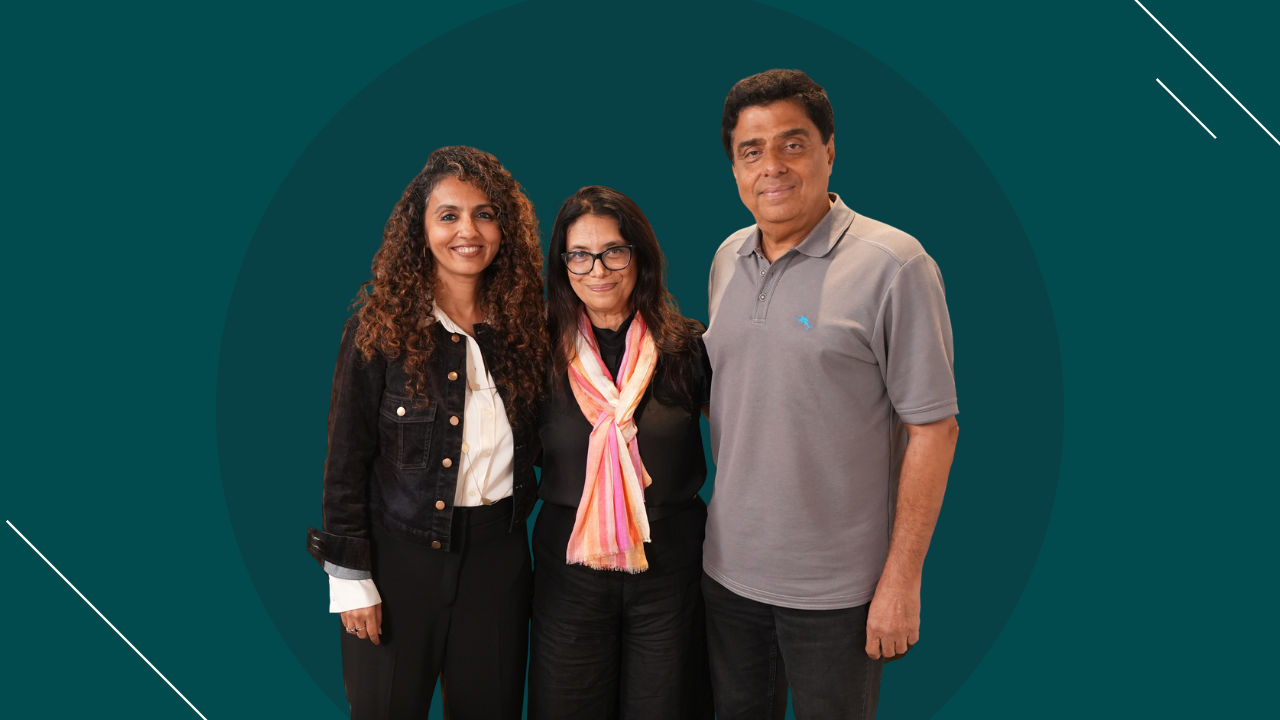
Yet, listening to Mr. Ronnie and Ms. Zarina Screwvala speak about the journey of Swades Foundation, it becomes clear that some of their most important learnings came not from what worked, but from what didn't.
At one point in the conversation, Ms. Naghma Mulla makes a remark that is both surprising and revealing: "In philanthropy, we should have awards for best mistakes."
It's easy to laugh at the idea. But the more you think about it, the more it makes sense. Because real change is messy.
No one solves rural poverty, improves public health, strengthens education or builds resilient communities by following a perfect blueprint. The reality is far more complicated. Every village is different. Every community has its own history, priorities and challenges. What works in one place may fail completely in another.
And perhaps that is why the most effective organisations are not the ones that get everything right the first time. They are the ones that keep learning.
For Swades, that learning came through a difficult moment of self-reflection.
By 2016-17, the organisation had spent four years expanding its work across Raigad district in Maharashtra. The team had grown. Programmes were reaching more people. Water systems, toilets, health initiatives, education programmes and livelihood interventions all showing visible results.
From the outside, things looked good. But internally, there was a growing discomfort. As Ms. Screwvala recalls: "I realised something is a bit off. Something is not working." It wasn't that communities weren't benefiting. They were. The question was deeper than that.
Were people becoming stronger and more self-reliant because of the work? Or were they becoming dependent on the organisation to keep solving problems for them?
The answer was not easy to confront. "We realised that actually we were creating a charitable organisation, not an empowerment organization," Ms. Screwvala adds.
That single insight changed everything. Many organisations would have continued doing more of the same. After all, the visible indicators were positive. The work was appreciated. Impact reports looked strong.
Instead, Swades chose to stop and think. Not because it had failed. But because it cared enough to ask whether it was creating the kind of change it truly wanted to see.
That pause led to a complete shift in approach. The foundation moved away from being primarily a provider of solutions and towards becoming a catalyst for community ownership. Village Development Committees, made up of local volunteers, became central to the model. Communities began taking greater responsibility for identifying priorities, solving problems together and driving their own development.
The focus moved from giving to participation. From assistance to ownership. From beneficiaries to changemakers.
Today, community leadership is at the heart of the Swades Dream Village model. The organisation reports reaching more than 1.1 million people, mobilising over 12,500 community volunteers and positively impacting over 600,000 lives.
Perhaps Swades' biggest transformation wasn't in the communities it reached, but in how it chose to work alongside them.