How Communities Are Scaling Ronnie and Zarina Screwvala’s Swades Model
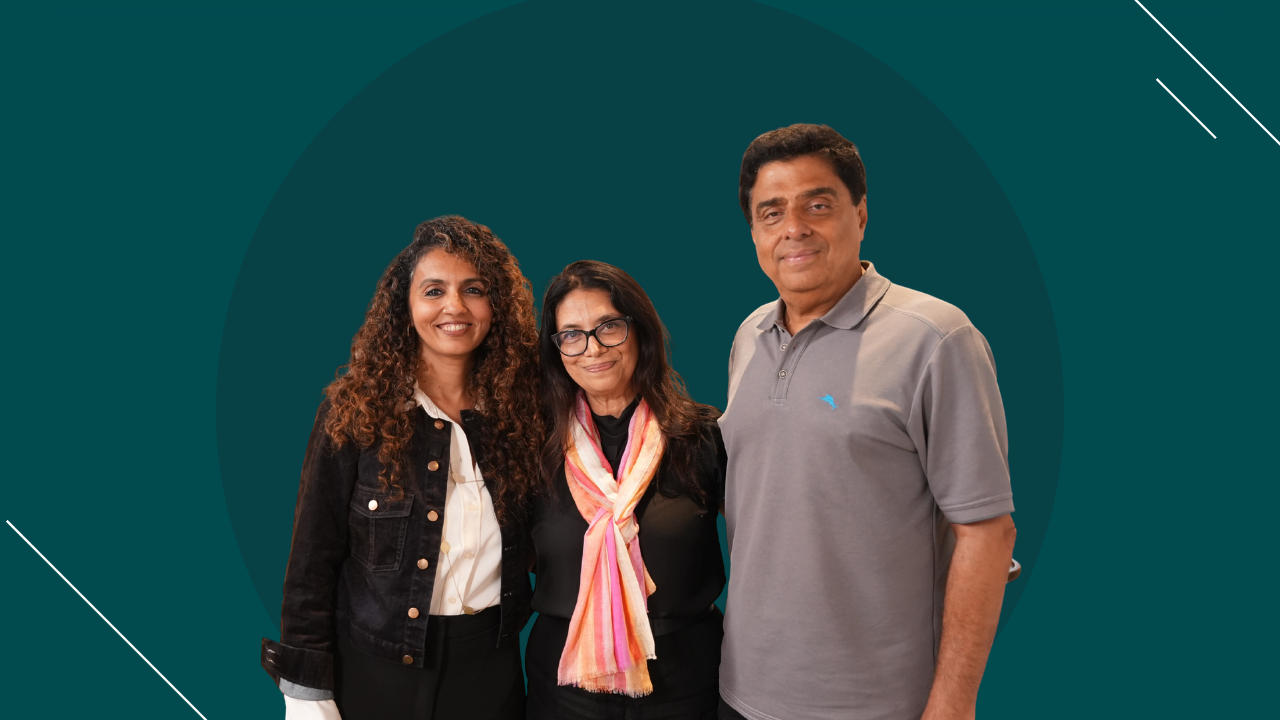
Ronnie and Zarina Screwvala on why the real measure of success is not how many villages an NGO enters, but how many continue the journey without it.



Key Takeaways:
- An unusual growth strategy — instead of expanding directly into new villages, Swades enabled communities to take the Dream Village model to nearly 600 neighbouring villages.
- Community ownership drives scale — these outreach efforts resulted in 120 villages inviting Swades to engage with them.
- Built for sustainability — the Foundation's Village Development Committees (VDCs) evolved into community-led clusters designed to reduce dependence on external support.
Most organisations spend a lot of time thinking about growth.
How many more people can we reach? How many more villages can we cover?
Mr. Ronnie and Ms. Zarina Screwvala found themselves asking a different question entirely: How do we leave?
It sounds unusual for an organisation that has spent more than a decade working on rural development. But for the founders of Swades Foundation, an exit strategy has always been part of the vision.
If change disappears when an NGO leaves, was it ever truly owned by the community?
Ms. Screwvala described how this question kept coming up within the organisation. "You can say, you know, you want to exit. Give me my exit strategy. So how to exit?"
The answer was not to withdraw suddenly. It was to gradually transfer leadership.
Swades operates with a singular goal: lifting one million rural Indians out of poverty every five years through community-driven change. Its 360-degree development model focuses on Health & Nutrition, Education, Water & Sanitation, and Economic Development, recognising that poverty rarely exists in isolation. Sustainable progress comes when these areas improve together.
Over the years, Swades invested heavily in building Village Development Committees (VDCs) — local groups that brought villagers together to identify priorities, make collective decisions and solve problems.
The next step was even more ambitious. The Foundation created Community Cluster Development Committees, bringing together community leaders across villages and asking a simple question:
Could communities themselves take the model forward? The answer turned out to be yes.
"The community went to 600 villages. Spoke about the Swades model." The messengers were not NGO staff.
They were local leaders, volunteers, farmers and community members who had seen the impact firsthand and wanted others to benefit as well.
What followed surprised even the Swades team. "We got 120 requests. They have to invite us in." For Ms. Screwvala, that distinction matters. The model wasn't being sold. Communities were choosing it. Villages were learning from other villages. People were trusting their peers more than presentations or outreach campaigns.
"Now we'll see if out of that, 50 really follow the formation of the VDC to the end—that's it, we're so happy. It's beautiful."
That word — beautiful — captures something deeper than scale. Because what was spreading wasn't simply a programme. It was belief. Belief that communities can organise themselves.
Belief that local leadership matters. Belief that development lasts longer when it is owned, not delivered.
Today, Swades works with more than 10,000 community volunteers and over 270 full-time professionals, with almost 90% of the team working at the grassroots. In more than a decade, the Foundation has reached 3,540 hamlets across Raigad and Nashik, covering an estimated population of 1.18 million people, with over 600,000 individuals directly benefiting from its programmes.
The impact is visible through the Dream Village movement. More than 250 Dream Villages have been created through a model built around community leadership, livelihoods, health, education, water and sanitation. The success of this approach also led to a partnership with the Government of Maharashtra to support the creation of 1,000 Dream Villages across the state.
In 2024, Swades became one of the first nonprofits in India to be listed on the National Stock Exchange's Social Stock Exchange (SSE), raising Rs.10 crore through its maiden Zero Coupon Zero Principal (ZCZP) issue — the largest such issue during the inaugural phase of the platform. The milestone reflected growing confidence in community-led, accountable and measurable models of social change.
The Swades story suggests that perhaps the biggest test of development is not whether organisations can stay. It is whether communities can continue without them. Because the strongest institutions don't create dependence. They create leadership.
And sometimes the best exit strategy is knowing that the work will continue long after you leave.